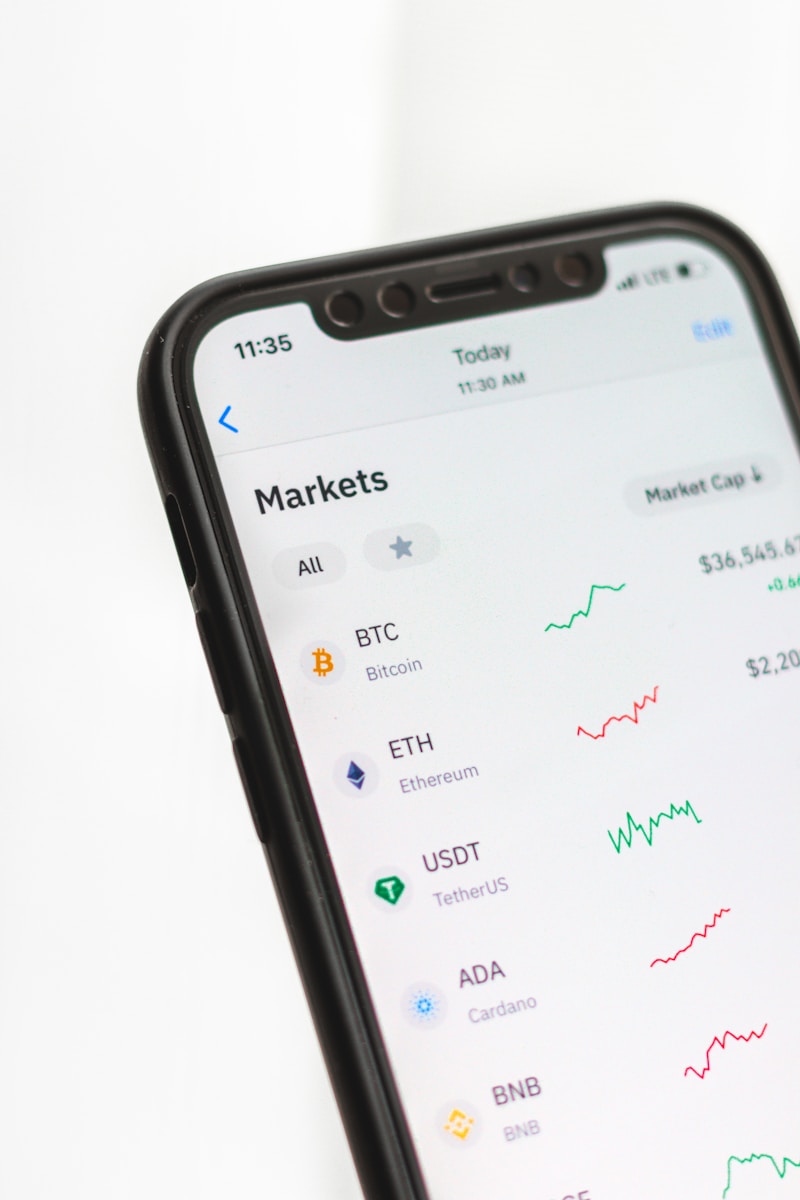
Cryptocurrency has transformed from a niche technology experiment into a trillion-dollar asset class that commands attention from retail investors, institutional managers, and regulatory bodies alike. Bitcoin, the first and largest cryptocurrency by market capitalization, has evolved from a curiosity dismissed by mainstream finance into an asset that major corporations hold on their balance sheets and that Wall Street firms offer to wealthy clients through regulated vehicles.
Yet despite this maturation, cryptocurrency remains among the most volatile and speculative asset classes in existence. Prices can swing 30% or more in a single week, regulatory announcements can decimate entire sectors overnight, and the underlying technology continues to evolve at a rapid pace. Building a cryptocurrency portfolio requires balancing the potential for extraordinary returns against the very real possibility of losing your entire investment. This guide provides a framework for doing exactly that.
Understanding the Cryptocurrency Landscape
The cryptocurrency market is not monolithic—it encompasses hundreds of distinct digital assets with different purposes, technologies, risk profiles, and return characteristics. Bitcoin, created in 2009 by the pseudonymous Satoshi Nakamoto, was designed as a decentralized digital currency—a peer-to-peer electronic cash system that operates without intermediaries like banks or governments. Its fixed supply of 21 million coins creates inherent scarcity, theoretically supporting value over time as demand grows.
Ethereum, launched in 2015 by Vitalik Buterin and his team, introduced the concept of smart contracts—self-executing programs that run on the Ethereum blockchain and enable decentralized applications (dApps), decentralized finance (DeFi) protocols, and non-fungible tokens (NFTs). Ethereum's broader utility makes it the second-largest cryptocurrency and a complementary holding to Bitcoin's store-of-value proposition.

Why Consider Cryptocurrency in Your Portfolio?
Portfolio Diversification
Cryptocurrency's correlation with traditional financial assets has historically been low, meaning it can provide diversification benefits when added to a portfolio of stocks and bonds. During certain market conditions—particularly during periods of currency debasement or loss of confidence in centralized financial institutions—cryptocurrency has demonstrated the potential to serve as a distinct asset class with independent return drivers.
Inflation Resistance
Bitcoin's fixed supply protocol makes it fundamentally different from fiat currencies, which central banks can expand infinitely. With no more than 21 million coins ever to exist, Bitcoin's scarcity is mathematically enforced rather than politically determined. Proponents argue this makes Bitcoin a form of digital gold—a hedge against currency debasement and monetary expansion that erodes the purchasing power of cash holdings over time.
Technological Innovation Exposure
Beyond investment returns, cryptocurrency provides exposure to groundbreaking technological developments in cryptography, distributed systems, and financial engineering. The blockchain infrastructure underlying cryptocurrencies has applications far beyond digital money, including supply chain tracking, identity verification, voting systems, and decentralized governance structures. Owning cryptocurrency is, in a sense, owning a stake in this technological revolution.
How Much Cryptocurrency Should You Own?
Determining the appropriate cryptocurrency allocation depends on factors unique to your financial situation: your age, investment timeline, overall net worth, risk tolerance, and investment goals. Financial advisors generally suggest that speculative assets—including cryptocurrency—should comprise only a small percentage of your total investment portfolio, typically ranging from 1% for conservative investors to 5-10% for those with higher risk tolerance and longer time horizons.
Conservative estimates suggest that even a 1-3% allocation to Bitcoin specifically could provide meaningful diversification benefits without exposing the portfolio to catastrophic loss. Aggressive investors with long time horizons might allocate 5-10%, understanding that they could lose half or more of their cryptocurrency holdings during market downturns while hoping to capture significant upside during bull markets.
Building Your Cryptocurrency Holdings
Bitcoin as the Foundation
Most cryptocurrency portfolios should begin with Bitcoin as the foundation. Its first-mover advantage, institutional adoption, regulatory clarity, and liquidity make it the most suitable cryptocurrency for serious investors. Bitcoin ETFs approved by the SEC provide convenient exposure without requiring self-custody, making it accessible to investors through traditional brokerage accounts just like stocks and bonds.
Ethereum and Smart Contract Platforms
Ethereum represents the next layer of most serious crypto portfolios, providing exposure to the broader ecosystem of decentralized applications, DeFi protocols, and blockchain-based services. Other smart contract platforms—Solana, Polkadot, Cardano, and Avalanche—offer higher-risk alternatives with potentially greater growth prospects but also greater technological and competitive risk.
Altcoins: Higher Risk, Higher Potential
Altcoins—any cryptocurrency other than Bitcoin—span an enormous range from established platforms to experimental projects with small market capitalizations and limited trading liquidity. Some serve legitimate purposes and may deliver substantial returns; others are outright scams or projects that will ultimately fail. If you choose to invest in altcoins, limit total altcoin exposure to a small portion of your overall portfolio and conduct thorough research before committing capital.
Risk Management Strategies
Cryptocurrency investing demands rigorous risk management given the asset class's extreme volatility. Never invest more than you can afford to lose entirely. Dollar-cost averaging—investing fixed amounts at regular intervals regardless of price—helps smooth out volatility rather than attempting to time the market. Diversifying across multiple cryptocurrencies reduces the impact of any single project's failure. Using reputable exchanges with strong security practices and, for larger holdings, self-custody with hardware wallets protects against exchange failures and hacking incidents that have claimed billions in investor funds.
Tax Considerations
In most jurisdictions, cryptocurrency is treated as property for tax purposes. This means that selling cryptocurrency for more than you paid creates a capital gains tax event, while cryptocurrency received as income is taxed at ordinary income rates. The complexity of tracking transactions across multiple wallets, exchanges, and blockchain networks can be substantial. Maintaining detailed records of every acquisition, disposition, and exchange throughout the year is essential for tax compliance and avoiding unexpected tax bills.
Consider consulting a tax professional familiar with cryptocurrency before building significant positions. They can advise on tax-loss harvesting strategies, optimum account structures (such as holding crypto within IRAs), and reporting requirements specific to digital assets.
The Bottom Line on Cryptocurrency Allocation
Cryptocurrency represents a genuinely new asset class with unique properties that warrant consideration in modern portfolios. However, its extreme volatility, regulatory uncertainty, technological complexity, and operational risks demand respect and caution. Approach cryptocurrency allocation as you would any high-risk investment—with careful sizing, diversified exposure, a long-term perspective, and only capital you can afford to lose entirely.
For broader portfolio context, explore our guides on Building a Diversified Portfolio and Fundamental Analysis to understand how cryptocurrency fits alongside traditional investments.
Key Takeaway
A typical cryptocurrency allocation ranges from 1-5% for most investors to 5-10% for aggressive investors with long time horizons. Build your crypto holdings on a foundation of Bitcoin and Ethereum, use dollar-cost averaging to manage volatility, and maintain rigorous record-keeping for tax purposes. Never invest more than you can afford to lose entirely.

Maria Arroyo
Certified Financial PlannerMaria has 20 years of experience helping investors navigate emerging asset classes with evidence-based strategies and disciplined risk management.